
Hands off Kerala’s classrooms.
First the courts. Then the politicians. Then a uniform in Balussery. Every step skipped the same people: the parents. Here is the playbook, and here is our answer.
“We are in the works of creating a new Kerala, one defined by equity and sensitivity. To achieve this, our students should first be given access to education in a free environment, unhindered by the burden of society’s heteronormative expectations.”
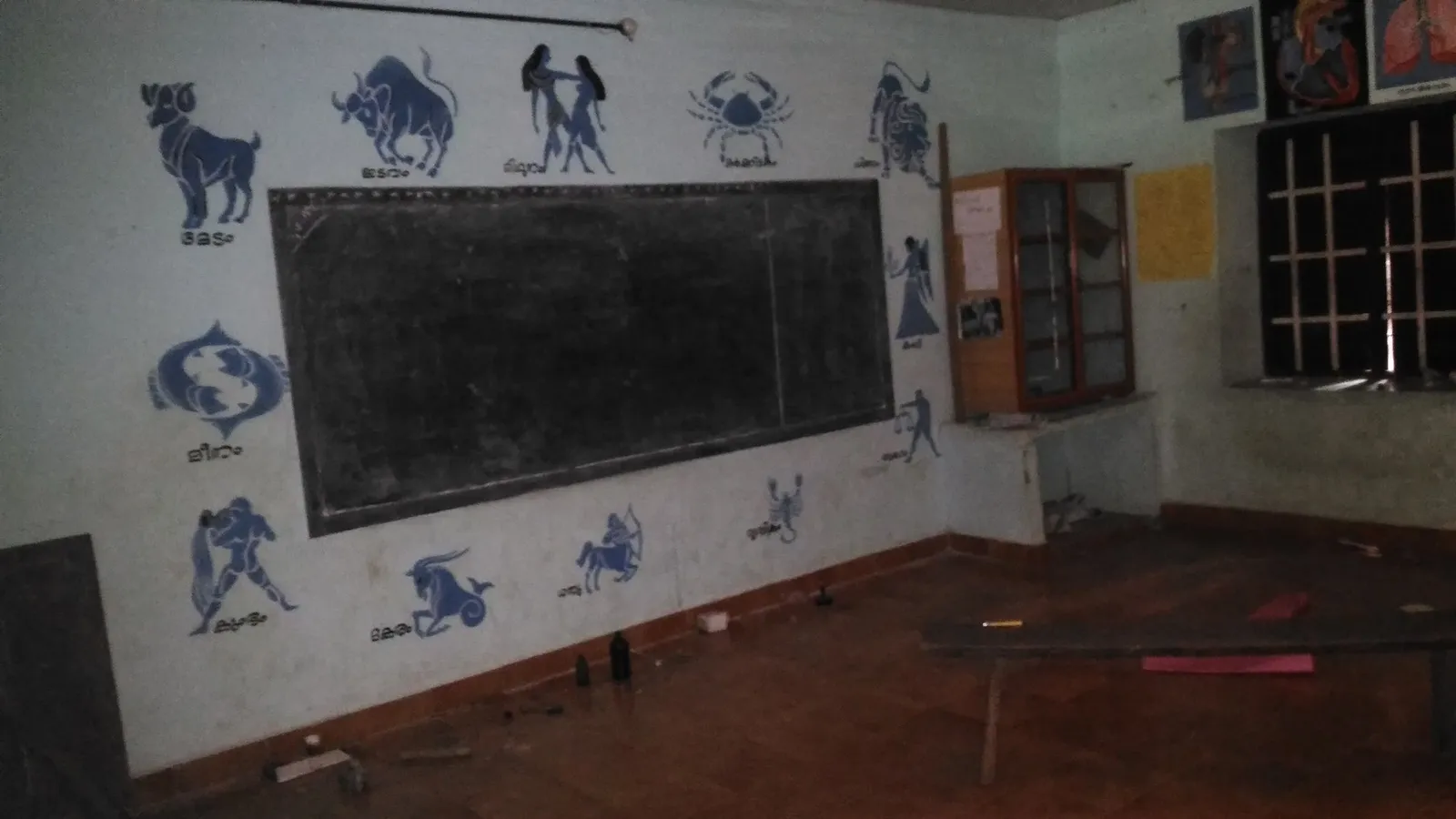
Dr. R. Bindu, then Kerala’s Minister for Higher Education and Social Justice, posted those words on 15 December 2021.[1] On the same day, a “gender-neutral” uniform of shirt and trousers was rolled out at the Government Girls’ Higher Secondary School in Balussery, Kozhikode, a school run by the state’s own education department.[2] The minister presented it as liberation: a uniform that would free the generations to come from the burden of society’s expectations.
Most people argued about the clothes. They missed the sentence. The minister was not talking about trousers. She was telling Kerala that the way its families live is a burden, and that the state’s schools would free children from it. When a minister speaks like that, it tells you one thing clearly: gender politics has put down its roots in Kerala, in our culture and in our politics.
For the uninitiated, “heteronormativity” is the activists’ word for the general understanding in society that the union of a man and a woman is the norm. They use it as an accusation. It is simply a description. Every person alive today exists because a man and a woman came together. A norm that all of us owe our existence to is not a burden on anyone. It is the foundation.
And a society that tears down that norm does not become neutral. It does not float in some free space with no norms at all. It gets a new norm in its place, written by activists, in which every arrangement is declared equally natural and anyone who says otherwise is the problem. Call it what it is: queer normativity. A government that calls the old norm a burden is not being neutral. It has chosen the new one, and it is sending our children to the front line.
This is not a slogan. It is a project, and it works in three stages, in this order: first the law, then the politics, then society itself. Change the law, and the courts declare the new norm legitimate. Win over the politicians, and the state begins to enforce it. Then reach the people, by then already prepared to accept it, through schools, campaigns and media. In much of the democratic world, including India, the first stage is already done. The uniform in Balussery in 2021 was the third stage arriving in a Kerala classroom.
To understand how we got here, start with the courts. None of this began in Balussery. It began in Delhi. In the late 1980s, the AIDS Bhedbhav Virodhi Andolan was formed there to fight discrimination around HIV, and its 1991 report, Less than Gay, was one of the first public documents in India to argue for homosexual rights.[3] In 1994 it went after Kiran Bedi, then Inspector General of Prisons in charge of Tihar Jail, for refusing to let condoms be handed out to inmates, and that fight made national headlines.[4]
The same year, Anjali Gopalan founded the Naz Foundation (India) Trust in Delhi, and within a few years Naz had overtaken the older groups. Naz was known for one thing above all: its work on HIV and AIDS. In 2001 it filed the petition against Section 377 of the Indian Penal Code, the law that criminalised same-sex relations, arguing that the law got in the way of its HIV work.[5]
Notice how the case was framed. It was not presented as a demand to rewrite the moral order of the country. It was presented as a health problem: volunteers trying to help AIDS patients, blocked by an old law. That is the method. Take a narrow, sympathetic cause, build it up into a story of oppression, win public sympathy, and carry that sympathy into a courtroom. HIV outreach was the door. It was never the destination.
Follow what happened next. The Delhi High Court read down Section 377 in 2009.[6] An astrologer, Suresh Kumar Koushal, and a group of religious organisations appealed, and in 2013 the Supreme Court reversed the High Court and said plainly that changing the law was the job of Parliament.[7] So it went to Parliament, where Shashi Tharoor brought a bill to the Lok Sabha twice, in 2015 and 2016, and both times the house the people elected refused even to let it be introduced.
Then, on 6 September 2018, the matter came back to the Supreme Court, and a five-judge bench decriminalised same-sex relations anyway.[8] It was hailed as historic by everyone who had worked for it. Naz, whose case had been argued for years by the Lawyers Collective, claimed it as the victory of a legal battle it had fought since 2001.[5] That day, the law of the largest democracy in the world crossed from one norm to the other.
“When the argument cannot win a vote, it is taken to the judges.”
The verdict did not legalise same-sex marriage. In 2023 the Supreme Court refused to do that as well and sent the question back to Parliament.[9] But do not mistake that for the end of it. The campaign has not stopped. It has only learned where to knock.
Then there is the money. Naz built its name on HIV work, and that work is real. But it has taken money from abroad: the American Levi Strauss Foundation has funded its peer-education work, and the British bank Standard Chartered funds its programme for girls.[10] There is nothing illegal in that. The question is who sets the agenda when the cheques come from abroad.
Put the pieces together. A legal battle against Section 377, led by an organisation working in AIDS awareness and rehabilitation, funded in part from abroad. Ask yourself honestly whether the goal was only to help AIDS patients, or whether HIV work was the shield behind which a much larger change was carried into India.
This is not a new question, and we are not the first to ask it. Powerful nations have always had more than one way to dominate weaker ones. Some use armies. Some use loans and conditions through the IMF and the World Bank. And some use culture, delivered through organisations that look like charities. As far back as 1999, the sociologist James Petras of Binghamton University argued that NGOs funded by Western donors often end up serving those donors’ goals rather than the people they claim to speak for.[11] Many of them present themselves as fighting imperialism, while quietly carrying its values into the countries they work in. A humanitarian front, a foreign cheque, and an agenda nobody at home voted for.
There is a second weapon, and it is just as effective as the first. The narrative is now so firmly established that anyone who criticises it is labelled a bigot, a hater, a relic. The theory says that people object only because they were raised in a traditional society, and that once the new norm is taught to everyone, the objections will disappear. So the strategy is not to answer critics. It is to make sure the next generation never learns to ask the question at all.
That is the political stage, and Kerala is deep inside it. Listen to politicians from the far left to the far right and you will hear the same phrases: same-sex marriage is “a matter of personal liberty”, and religion must “adapt to the modern era”. Some say it knowingly, some without thinking about where the words came from. Those phrases did not grow in Kerala’s soil. They were planted, through seminars, campaigns and endless repetition in print, on television and online, until they sounded like common sense.
When the uniform was opposed in Kozhikode, look at what the objectors got from their own government. Launching it, Dr. Bindu said that those who love children would never oppose such “progressive changes”.[2] The then Education Minister, V. Sivankutty, said his department would support moves to ensure gender equality, while insisting the government’s policy was “not to impose anything on the people”.[12] Not one piece of evidence was offered to the objectors. They were told, in effect, that objecting meant they did not love their children. That is how you win without winning the argument: you make the other side afraid to have it.
And that is why it ends up in a school. A uniform is small, which is exactly why it works. It turns a contested idea into a daily habit for a child too young to question it. Nobody asked Kerala’s mothers and fathers whether the values of their homes are a burden. The minister decided that for them. Law first, then politics, and then, in 2021, the classroom: the third stage, right on schedule.
So we will say what others won’t. A healthy society is built on healthy families, and a healthy family is built on a man, a woman and the children they raise. Only through healthy families can a country raise a healthy generation. Parents decide the values their children grow up with. Not ministers, and not campaigns paid for from abroad.
We have three questions for the former minister. Who asked for this? Which parents were consulted? And what evidence shows that Kerala’s children are harmed by the families they come from?
It happened in 2021. If we stay silent, it will happen again: in the next school, through the next policy, in the next classroom. That is why we are speaking up now, and why we ask every parent in Kerala to do the same.
We are not against any person. We are against an agenda nobody voted for, pushed from the top down and delivered through our children. Everyone who loves their family and this country has a duty to stand up and say so, openly and without fear. Kerala deserves this argument in the open, and we are ready to have it.
Unafraid. Unapologetic. Rooted in science.
Sources
- Dr. R. Bindu, then Minister for Higher Education and Social Justice, Kerala. Post on X (Twitter), 15 December 2021, as reproduced by Careers360, 16 December 2021.
- The News Minute. “Kerala school implements gender neutral uniform, Muslim groups protest.” 15 December 2021.
- AIDS Bhedbhav Virodhi Andolan. Less than Gay: A Citizens’ Report on the Status of Homosexuality in India. New Delhi, 1991.
- Kai Friese. “Safe custody?” India Today, 31 May 1994.
- Naz Foundation (India) Trust. Wikipedia.
- Naz Foundation v. Government of NCT of Delhi. Delhi High Court, 2 July 2009.
- Suresh Kumar Koushal v. Naz Foundation. Supreme Court of India, 11 December 2013.
- Navtej Singh Johar v. Union of India. Supreme Court of India, 6 September 2018.
- Supriyo Chakraborty v. Union of India. Supreme Court of India, 17 October 2023.
- Naz Foundation (India) Trust, Annual Report 2014–15 (Standard Chartered, Goal programme); Wikipedia, Naz Foundation (India) Trust (Levi Strauss Foundation, peer education).
- James Petras. “NGOs: In the Service of Imperialism.” Journal of Contemporary Asia 29, no. 4 (1999): 429–440.
- Onmanorama. “Islamic outfits protest after Balussery school introduces gender-neutral uniform.” 15 December 2021.
Disagree? Send us your evidence.
We read every reply, and we correct mistakes in the open.