
Five Common Myths About Sex Differences, Checked Against The Evidence
Sex is binary. It’s innate. Science says so. Liberal ideology doesn’t want you to hear it.

Every number in it is sourced. Check them yourself. That’s the whole point.
Machane, Let’s Start in the Kalari
Ever stood in a kalari at 5 a.m.? Red mud floor. Oil lamp burning. The gurukkal watching you like a hawk. He never told his students they were all the same. He trained the body in front of him. That’s not hate. That’s coaching.
Our muthumuthachans and muthumuthashis (great grandparents) built this state on one simple idea: there are two sexes, they are different, and it matters. They didn’t need a PhD to see it. Then for fifty years, professors, NGO types and Twitter experts told us that idea was backward. Every difference was “social conditioning.” Boys like cars because we bought them cars. Sex is a “spectrum.” Simple.

A Kerala family, photographed in 1902. Photo: Clain and Perl studio, Madras; Basel Mission archive (public domain), via Wikimedia Commons.
Here’s the problem. Science actually went and checked. Hormones, brain scans, genes, stopwatches. And it came back with the answer liberal ideology hates: sex is binary, the differences are real and innate, they start before birth, and they don’t vanish when a society gets more equal. For some traits, they even get bigger.
Science tells us what is. A sane society moves according to it. Five myths, five knockouts. Then the part that should make your blood boil: what happens to scientists who say any of this out loud.
Myth 1: “It’s All Just Socialization”
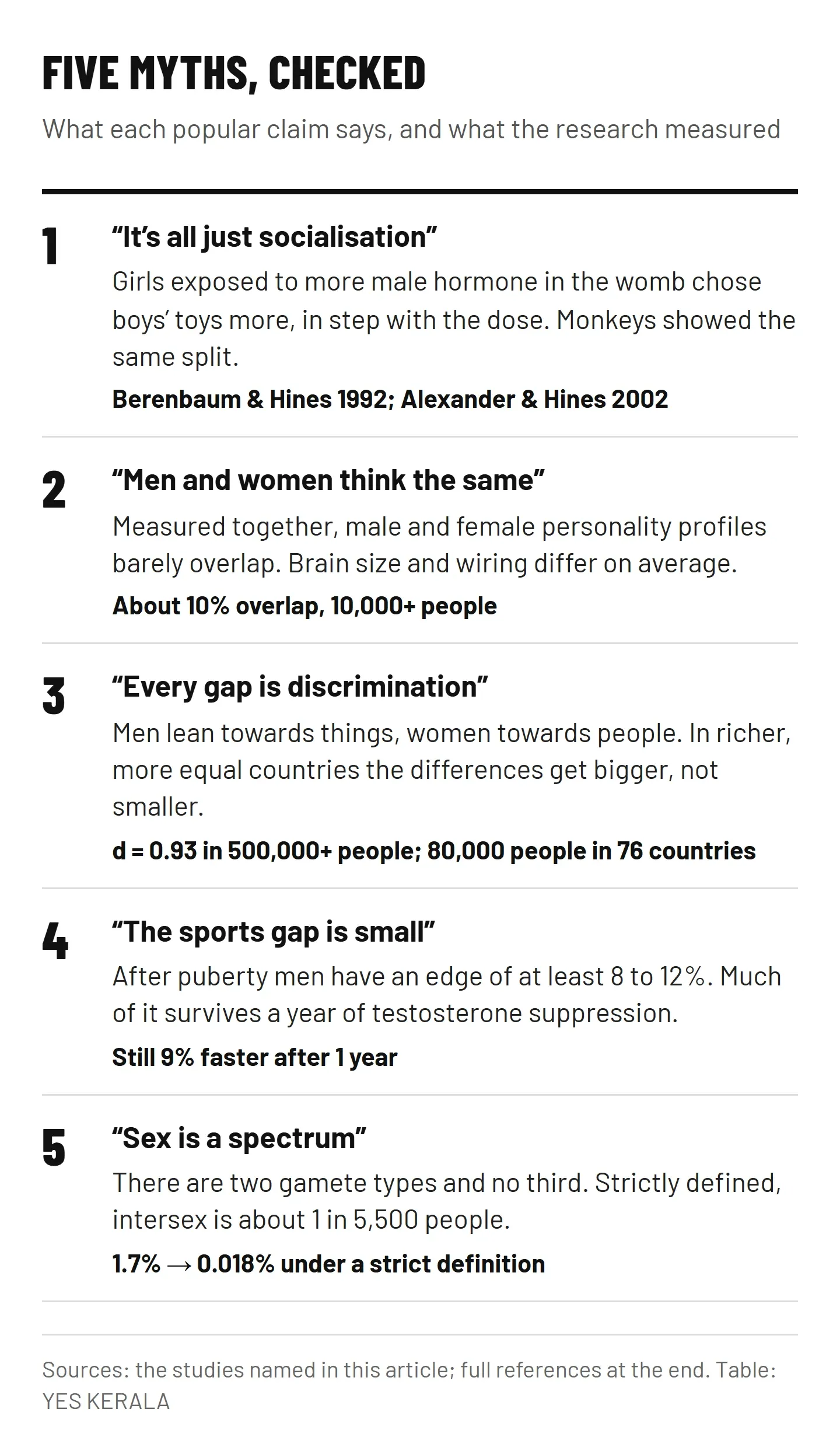
Want to test whether toy choice is learned? Find girls whose hormones went off-script before birth. Girls with congenital adrenal hyperplasia (CAH) get unusually high doses of male hormones in the womb, but they’re raised as ordinary girls. Berenbaum and Hines (1992) found these girls played more with trucks and blocks than unaffected girls. Later work went further: Nordenström and colleagues (2002) found that the more male hormone a girl had been exposed to before birth, the more she played with boys’ toys.
That’s a dose-response curve. You don’t get one of those because Amma bought the wrong toys. Hines (2011) sums it up: testosterone before birth shapes children’s toy and activity interests, and probably some other traits too. It starts before a single parent says a single word.
Still not convinced? Ask a monkey. Alexander and Hines (2002) gave vervet monkeys human toys. No parents, no ads, no pink aisle. The males spent more time than the females with the ball and the police car. The females spent more time with the doll and the cooking pot.

A vervet monkey. In Alexander and Hines’s study, the males spent more time with the ball and the police car, the females with the doll and the cooking pot. Photo: Charles J. Sharp, CC BY-SA 4.0, via Wikimedia Commons.
Culture shapes what nature starts, the way a gurukkal turns raw power into skill. But “it’s only culture”? Dead on arrival.
Myth 2: “Men and Women Think the Same”
Their favourite paper is Hyde’s (2005) “gender similarities hypothesis.” She looked at one trait at a time and found most sex differences small. Here’s the trick: look at traits one at a time and almost any two groups look alike.
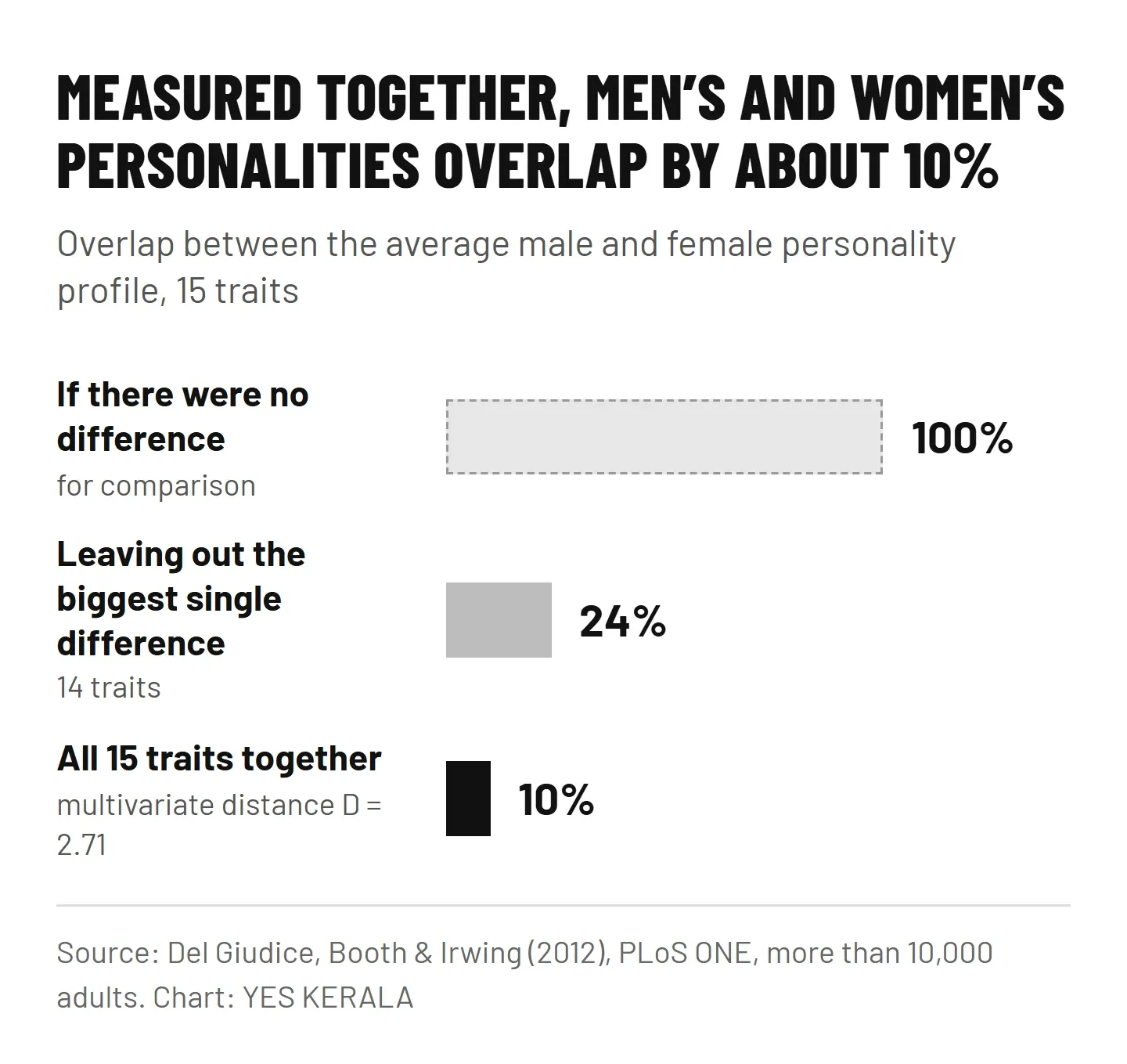
Del Giudice, Booth and Irwing (2012) did it properly. They measured fifteen personality traits together, in more than 10,000 people. Result: a multivariate distance of 2.71. Translation? Male and female personality profiles overlap by only about 10%. Even after dropping the single biggest difference, the overlap was just 24%. Women score higher on average in warmth and sensitivity. Men score higher in assertiveness and emotional stability.
The brain scans say the same thing. Ritchie et al. (2018), 5,216 UK Biobank adults: men had larger average brain volumes, women had thicker cortex in many regions, with plenty of overlap between individuals. Ingalhalikar et al. (2014), 949 young people aged 8 to 22: males wired more strongly within each hemisphere, females more strongly between them.
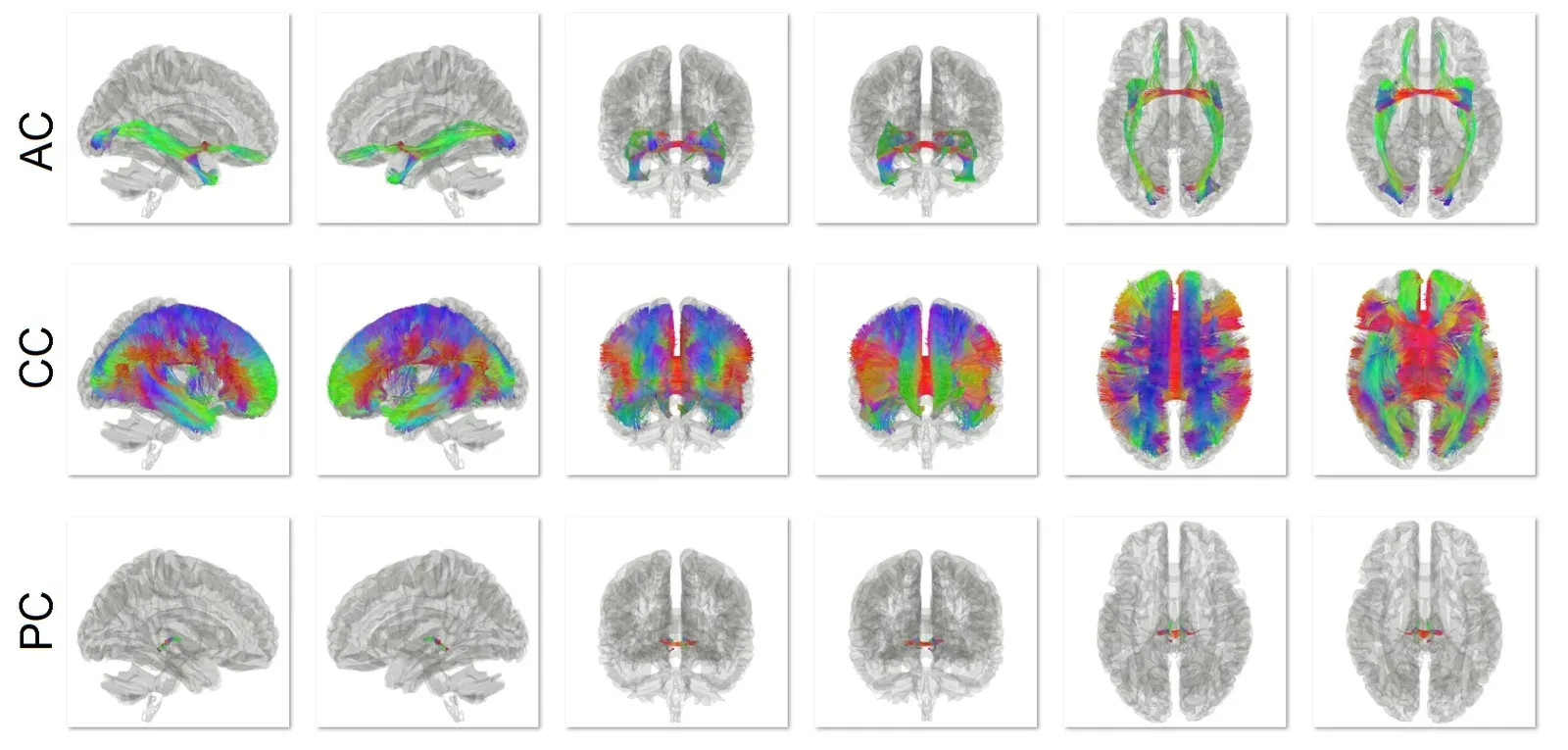
The brain’s wiring between its two halves, mapped from MRI scans. Image: Yeh et al. (2018), NeuroImage, CC BY-SA 4.0, via Wikimedia Commons.
Two sexes. Two patterns. “Sex leaves no mark on the brain”? That one’s finished.
Myth 3: “Every Gap Is Discrimination”
The slogan: treat women fairly and every job goes 50:50. Reality: Su, Rounds and Armstrong (2009) pooled interest surveys from over 500,000 people. Men lean towards working with things. Women lean towards working with people. The gap is big (d = 0.93), and for engineering interest it’s bigger still (d = 1.11).
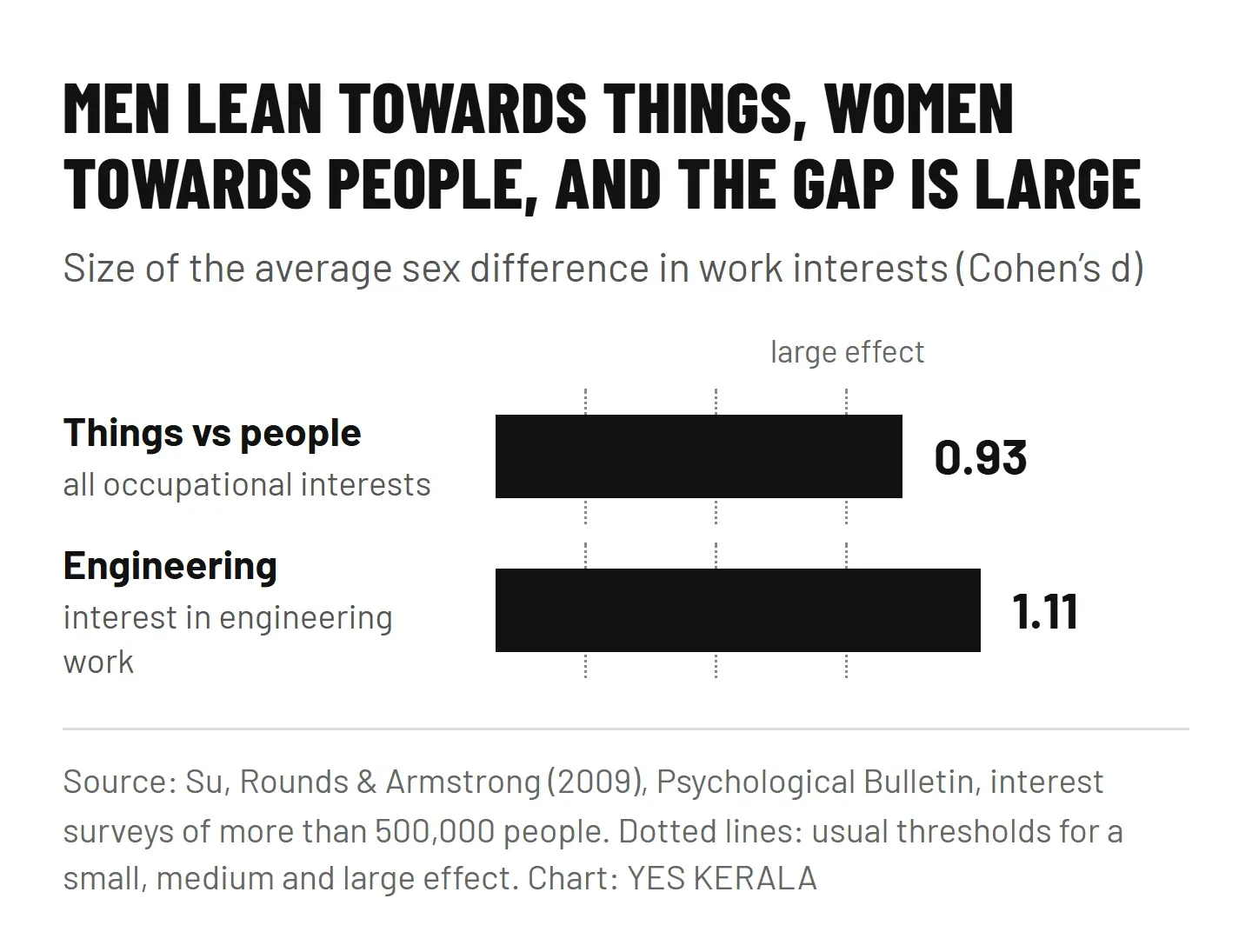
Walk into any hospital from Dubai to London and you’ll find Kerala nurses holding the place together. Nobody forced them. They chose people-work and they’re brilliant at it.
Now the part that breaks the slogan completely. Stoet and Geary (2018) looked at about 472,000 teenagers across 67 countries and regions. Girls did as well as or better than boys in science in two out of three countries. Yet in the most gender-equal countries, Finland, Norway, Sweden, fewer women took STEM degrees. Countries like Albania and Algeria had more. The authors’ explanation: when you’re rich and safe, you follow your interests, not your pay cheque. (Richardson et al., 2020, challenged their method; Stoet and Geary hit back.)
Falk and Hermle (2018) ran a similar analysis of preferences like risk-taking, patience and altruism: 80,000 people in 76 countries. Richer, more equal countries had bigger sex differences, not smaller.
Read that again. Give people freedom, and men and women choose differently. That’s what the science says. A society that moves according to it respects those choices. Liberal ideology wants equal outcomes anyway, which means pushing people against their own nature. So who’s the authoritarian now?
Myth 4: “The Sports Gap Is Small, or Just Social”
Watch a Chundan vallam (traditional race boat) tear across Punnamada lake. Close to a hundred oarsmen. Arms like coconut trunks. That’s testosterone you’re looking at.

Oarsmen at the Nehru Trophy boat race, Alappuzha. Photo: Ronald Tagra, CC BY 2.0, via Wikimedia Commons.
Handelsman et al. (2018) laid it out. Before puberty, boys and girls perform about the same. After puberty, testosterone gives men more muscle, bigger bones, more haemoglobin, bigger hearts and lungs. That adds up to a male advantage of at least 8–12%, and far more in upper-body strength and throwing. Elite women don’t close it. Not because they train less. Because of biology.
That’s why women’s sport exists. P.T. Usha, the Payyoli Express, became a legend because there was a women’s category for her to run in. That category is a shield. Break it and you break women’s sport.
So what happens when someone who went through male puberty suppresses testosterone? Hilton and Lundberg (2021) reviewed the studies: after 12 months, muscle mass and strength drop by only about 5%. The original male advantage is far bigger than that. Roberts, Smalley and Ahrendt (2021) checked US Air Force fitness records. Before hormones, transgender women did 31% more push-ups than the female average and ran 1.5 miles 21% faster. After the one year of suppression that sports bodies required, they were still running 9% faster. Push-ups only evened out after two years, and the running edge was still there after two and a half. (Small study: 46 transgender women, 29 transgender men, a fitness test rather than elite sport. The authors asked for more research. The direction is still clear.)
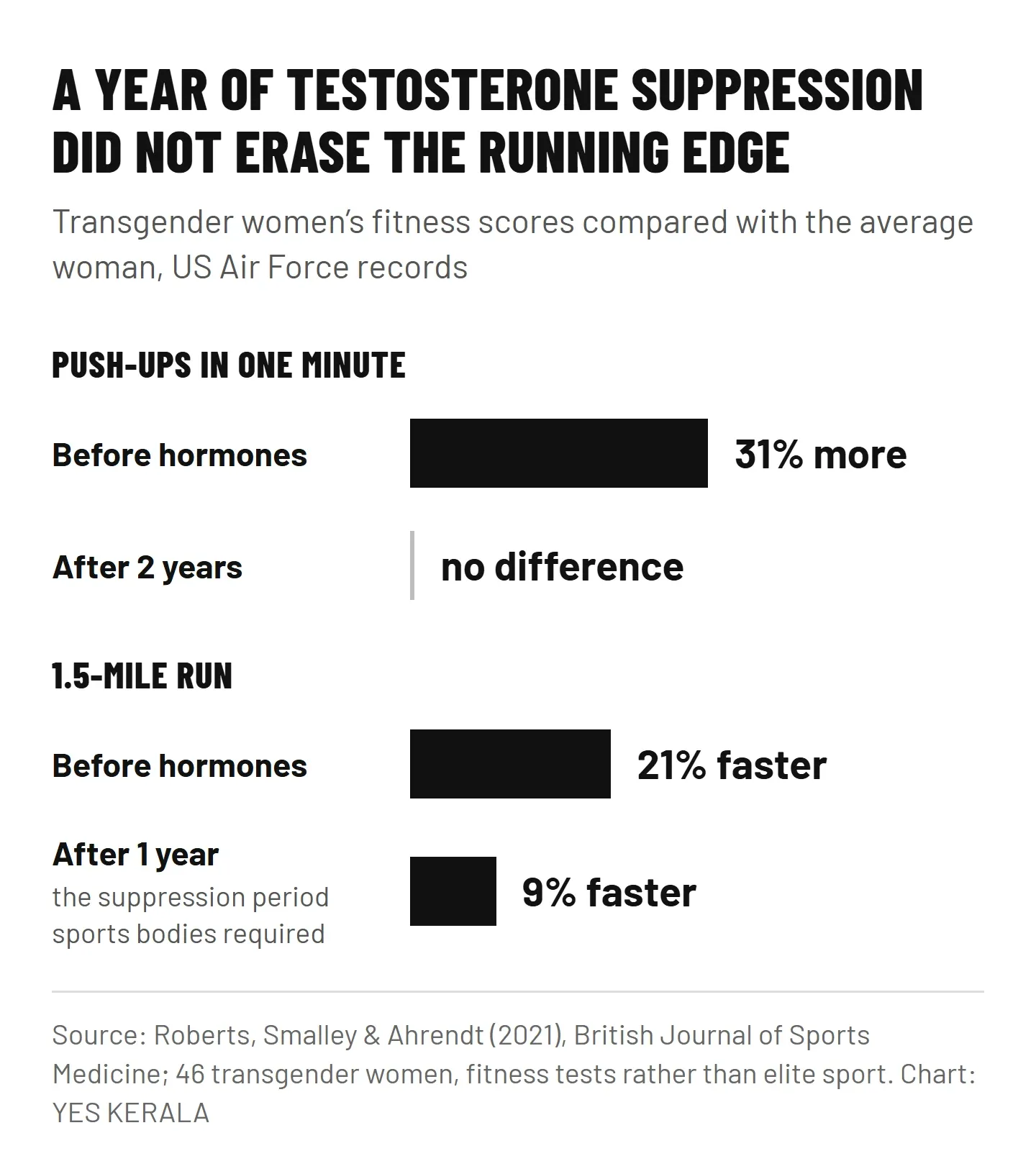
Science says the male body keeps its edge. Society should move according to it. Protecting the women’s category isn’t hate. It’s fairness. Anyone who calls it hate is telling female athletes to keep quiet and lose.
Myth 5: “Sex Is a Spectrum”
Biology defines sex by one thing: gamete size. Males make small ones (sperm). Females make large ones (eggs). There is no third gamete. Never has been. Sex is binary.
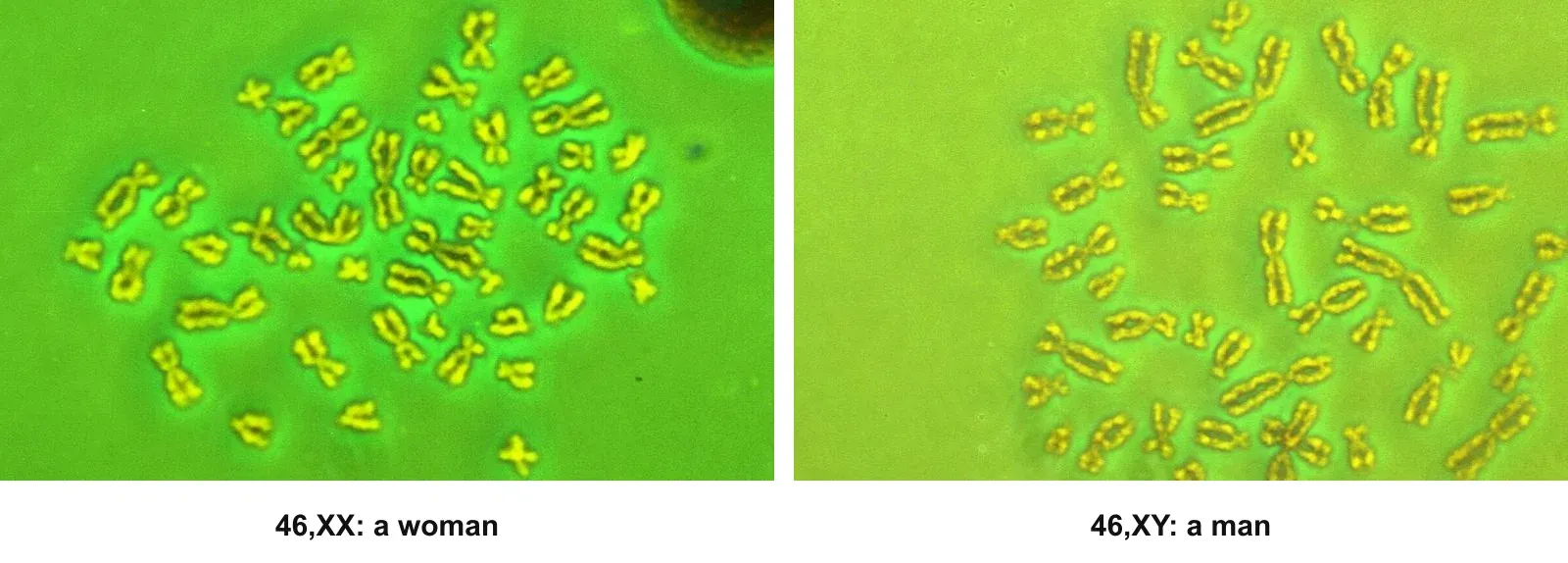
Human chromosomes under the microscope: a woman’s set (46,XX) and a man’s (46,XY). Photos: Josef Reischig, CC BY-SA 3.0, via Wikimedia Commons (cropped and combined).
Disorders of sex development (DSDs) are real, and the people who have them deserve respect and proper medical care, not memes and not politics. But they’re variations within a two-sex system, not proof of a third sex.
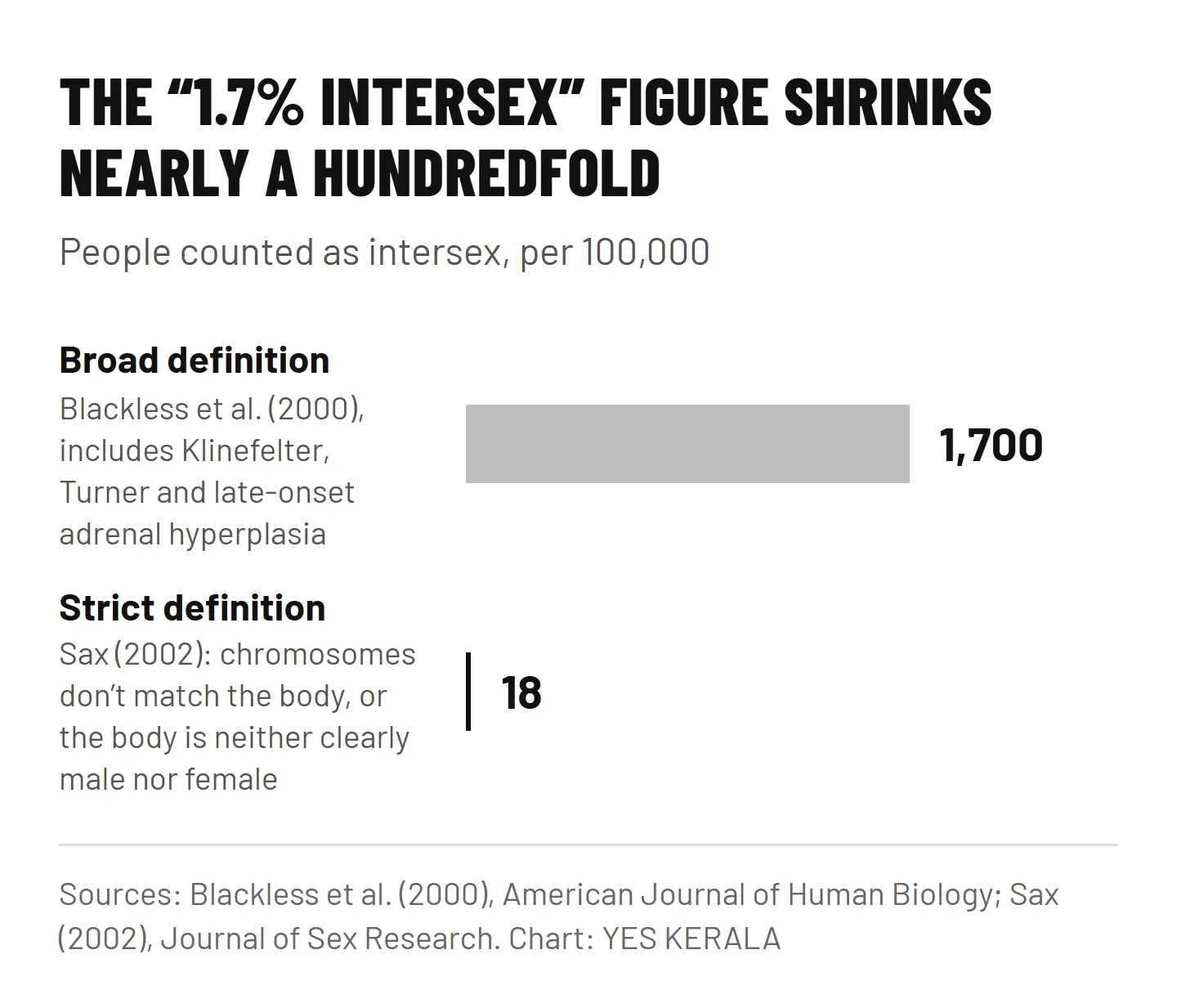
And that famous “1.7% of people are intersex” line? It comes from Blackless et al. (2000), and it counts conditions most doctors don’t call intersex at all, like Klinefelter syndrome, Turner syndrome and late-onset adrenal hyperplasia. Sax (2002) used a strict definition, cases where chromosomal sex doesn’t match the body or the body can’t be classed as male or female, and got about 0.018%. Nearly a hundred times smaller. The “spectrum” was built on a padded number.
The Real Fight: Liberal Ideology vs Science
Here’s what should make you angry. These myths don’t survive because the evidence backs them. They survive because people who question them get punished.
- Lisa Littman, 2018. A Brown University researcher publishes a study in PLOS ONE suggesting peer influence might play a role in some teenagers’ sudden gender distress. Online outrage follows. Brown pulls its own press release. The journal orders a rare post-publication review. Months later the paper comes back with a new title and a long correction, and its core results essentially unchanged. The message to every young researcher: ask the wrong question, and your own university will hide you.
- Kenneth Zucker, 2015. Ran Toronto’s child gender clinic for over 30 years. Fired after an external review, clinic shut down. Turned out the review contained false claims, including that he’d called a patient “hairy little vermin.” He never said it. In 2018 his hospital, CAMH, apologised “without reservation” and paid him CA$586,000 in damages, legal fees and interest. CAMH still stands by closing the clinic. But a man’s career there ended on a report with a lie in it.
- J. Michael Bailey, 2003 onward. A Northwestern sex researcher writes a book about transgender identity. Years of complaints and a formal investigation follow. Bioethicist Alice Dreger dug into the whole thing, in a 2008 paper and her 2015 book Galileo’s Middle Finger, and argued the campaign had stopped being about the science and become an attack on the man.
- The Cass Review, 2024. NHS England asked paediatrician Hilary Cass to examine youth gender medicine, backed by systematic reviews from the University of York. Her verdict: the evidence was “remarkably weak.” Puberty blockers had been given to children without solid proof they helped. England stopped prescribing them outside research. Cass called the toxicity of the debate “exceptional”, and described clinicians afraid to discuss their views openly. Doctors, afraid to ask “where’s the evidence?” A group of mostly American clinicians and academics, published by Yale Law School’s Integrity Project, attacked the review’s methods in a paper that was not peer-reviewed. England didn’t back down. For years, the people asking for evidence were called bigots. They were right.
Kerala had its own little lesson. When schools from Ernakulam to Balussery brought in “gender-neutral” uniforms (Balussery in December 2021), people noticed something funny: the girls were put in the boys’ shirts and trousers. IUML MLA M. K. Muneer asked why the boys weren’t put in churidars instead. Even a policy built to erase sex had to start from the two sexes.
See the pattern? When the evidence threatens the slogan, liberal ideology goes after the scientist, not the data. That isn’t progress. That’s the old Inquisition with a new hashtag.
Real Men Follow the Science All the Way
If society should move according to science, that rule doesn’t come with an opt-out. A strong man follows the evidence even when it punches his own side. So here it is, straight.
Being gay isn’t a choice. Bailey et al. (2016) reviewed the research: the evidence points far more to non-social causes of sexual orientation, likely including what happens before birth, than to upbringing. It isn’t chosen, and it’s hard to change. The biggest genetic study yet, Ganna et al. (2019) with 477,522 people, found many genes with tiny effects on same-sex sexual behaviour. Together they explained 8–25% of the variation and couldn’t predict any individual. So nobody needs to pretend orientation is a lifestyle pick. The traditional case for marriage, family and children stands on moral and civic ground.
Gender dysphoria is serious, and these people need real care. Dhejne et al. (2011) followed all 324 people who had sex-reassignment surgery in Sweden between 1973 and 2003. Compared with the general population, they had about 2.8 times the death rate and nearly 5 times the rate of suicide attempts. (For people operated after 1989, these differences were smaller and not statistically significant.) The authors were clear: this doesn’t prove surgery caused it, and it doesn’t prove transition was a mistake. What it shows is that these people need serious, long-term mental-health support, not slogans. Dignity for adults. Caution for children. That’s not weakness. That’s what a strong society does.
Final Word
Sex is binary. It’s innate. And the differences are larger than the “social construction” crowd will ever admit. Science tells us what is, and society should move according to it. The case for traditional norms stands on moral and civic ground as well.
Liberal ideology should never have to fight science itself. And anyone who tries to silence research to protect a slogan has already lost the argument.
The kalari had it right all along. Know the body. Respect the discipline. Face your opponent in the open.

Sword and shield practice in a kalari. Photo: India1277, CC BY-SA 4.0, via Wikimedia Commons.
Sources
- Alexander, G. M., & Hines, M. (2002). Sex differences in response to children’s toys in nonhuman primates (Cercopithecus aethiops sabaeus). Evolution and Human Behavior, 23(6), 467–479.
- Bailey, J. M., Vasey, P. L., Diamond, L. M., Breedlove, S. M., Vilain, E., & Epprecht, M. (2016). Sexual orientation, controversy, and science. Psychological Science in the Public Interest, 17(2), 45–101.
- Berenbaum, S. A., & Hines, M. (1992). Early androgens are related to childhood sex-typed toy preferences. Psychological Science, 3(3), 203–206.
- Blackless, M., et al. (2000). How sexually dimorphic are we? Review and synthesis. American Journal of Human Biology, 12(2), 151–166.
- CAMH settlement with Dr. Kenneth Zucker (October 2018). Reported by CBC News, “CAMH reaches settlement with former head of gender identity clinic.”
- Cass, H. (2024). Independent Review of Gender Identity Services for Children and Young People: Final Report. Commissioned by NHS England.
- Del Giudice, M., Booth, T., & Irwing, P. (2012). The distance between Mars and Venus: Measuring global sex differences in personality. PLoS ONE, 7(1), e29265.
- Dhejne, C., et al. (2011). Long-term follow-up of transsexual persons undergoing sex reassignment surgery: Cohort study in Sweden. PLoS ONE, 6(2), e16885.
- Dreger, A. D. (2008). The controversy surrounding The Man Who Would Be Queen: A case history of the politics of science, identity, and sex in the Internet age. Archives of Sexual Behavior, 37(3), 366–421.
- Dreger, A. (2015). Galileo’s Middle Finger: Heretics, Activists, and the Search for Justice in Science. Penguin Press.
- Falk, A., & Hermle, J. (2018). Relationship of gender differences in preferences to economic development and gender equality. Science, 362(6412), eaas9899.
- Ganna, A., et al. (2019). Large-scale GWAS reveals insights into the genetic architecture of same-sex sexual behavior. Science, 365(6456), eaat7693.
- Handelsman, D. J., Hirschberg, A. L., & Bermon, S. (2018). Circulating testosterone as the hormonal basis of sex differences in athletic performance. Endocrine Reviews, 39(5), 803–829.
- Hilton, E. N., & Lundberg, T. R. (2021). Transgender women in the female category of sport: Perspectives on testosterone suppression and performance advantage. Sports Medicine, 51(2), 199–214.
- Hines, M. (2011). Gender development and the human brain. Annual Review of Neuroscience, 34, 69–88.
- Hyde, J. S. (2005). The gender similarities hypothesis. American Psychologist, 60(6), 581–592.
- Ingalhalikar, M., et al. (2014). Sex differences in the structural connectome of the human brain. PNAS, 111(2), 823–828.
- Littman, L. (2018). Parent reports of adolescents and young adults perceived to show signs of a rapid onset of gender dysphoria. PLOS ONE, 13(8), e0202330. Correction: PLOS ONE (2019), 14(3), e0214157.
- Nordenström, A., Servin, A., Bohlin, G., Larsson, A., & Wedell, A. (2002). Sex-typed toy play behavior correlates with the degree of prenatal androgen exposure assessed by CYP21 genotype in girls with congenital adrenal hyperplasia. Journal of Clinical Endocrinology & Metabolism, 87(11), 5119–5124.
- Richardson, S. S., Reiches, M. W., Bruch, J., Boulicault, M., Noll, N. E., & Shattuck-Heidorn, H. (2020). Is there a gender-equality paradox in science, technology, engineering, and math (STEM)? Commentary on the study by Stoet and Geary (2018). Psychological Science, 31(3), 338–341.
- Ritchie, S. J., et al. (2018). Sex differences in the adult human brain: Evidence from 5216 UK Biobank participants. Cerebral Cortex, 28(8), 2959–2975.
- Roberts, T. A., Smalley, J., & Ahrendt, D. (2021). Effect of gender affirming hormones on athletic performance in transwomen and transmen: Implications for sporting organisations and legislators. British Journal of Sports Medicine, 55(11), 577–583.
- Sax, L. (2002). How common is intersex? A response to Anne Fausto-Sterling. Journal of Sex Research, 39(3), 174–178.
- Stoet, G., & Geary, D. C. (2018). The gender-equality paradox in science, technology, engineering, and mathematics education. Psychological Science, 29(4), 581–593.
- Stoet, G., & Geary, D. C. (2020). The gender-equality paradox is part of a bigger phenomenon: Reply to Richardson and colleagues (2020). Psychological Science, 31(3), 342–344.
- Su, R., Rounds, J., & Armstrong, P. I. (2009). Men and things, women and people: A meta-analysis of sex differences in interests. Psychological Bulletin, 135(6), 859–884.
- McNamara, M., Baker, K., Connelly, K., Janssen, A., Olson-Kennedy, J., Pang, K. C., Scheim, A., Turban, J., & Alstott, A. (2024, July 1). An evidence-based critique of “The Cass Review” on gender-affirming care for adolescent gender dysphoria. The Integrity Project, Yale Law School.
- Kerala gender-neutral uniform debate (December 2021), including IUML MLA M. K. Muneer’s remarks. Reported by Outlook India, Scroll.in and The News Minute.
Disagree? Send us your evidence.
We read every reply, and we correct mistakes in the open.